


 中文简体
中文简体
 English
how about persian rugs
how about persian rugs
Persian carpets have been given to be noble, elegant and mysterious since ancient times, which is one of the boutique carpets. It is also well-known internationally, and is loved by the world for its fine texture, simple and elegant patterns and exquisite craftsmanship. Persian carpets are one of the best in carpets. Its exquisite weaving craftsmanship and artistic value have been widely known, because it has been integrated into the ancient Persian civilization, and gradually formed an artistic form, which is a kind of art. Persian carpets have fine workmanship, unique patterns, and various colors, which are integrated with the ancient oriental culture. It has become an artistic value and a collection value at the same time. Good reputation and affordable price.
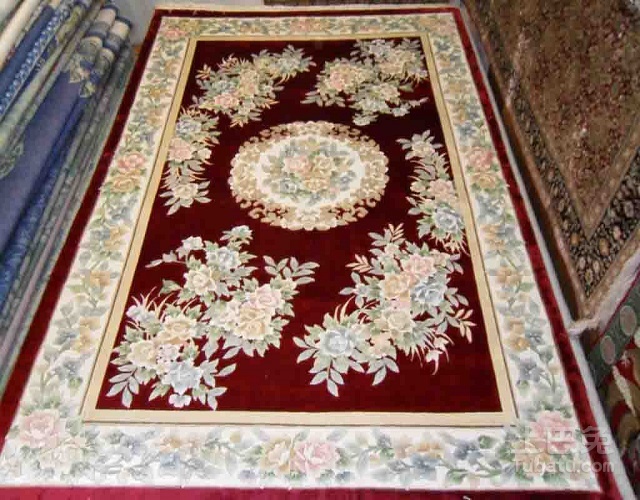
Persian Carpet Brand
From the day it was produced to the present, Persian carpets have a history of 2,500 years, which is really a long history. It is impossible to verify when the Persian carpet appeared. It was around the time of the nomads that the Iranians began to use wool to make carpets. This is probably the origin of the Persian carpet. After the 21st century, Persian carpets are even more favored by people, especially young people are particularly fond of Persian carpets. Persian rugs are popular because of their long history. Persian rugs can be said to be the finest in rugs, because of their unique craftsmanship, they have a very high artistic value. Another unique feature of Persian rugs is that there are no two identical Persian rugs, which is one reason why Persian rugs have a high collection value. Persian rugs are ornaments in ordinary households in Iran, which can be laid on the ground or hung on the wall to decorate the wall. If it is a handmade Persian carpet, it is even more powerful, because it takes a lot of manpower and material resources to manufacture, so handmade carpets are expensive.
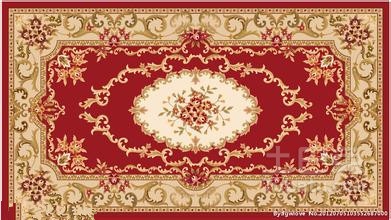
persian rug prices
With the popularity of Persian carpets, there are also genuine and counterfeit products. There are Persian hand-made and machine-made, and domestic hand-made and machine-made. Of course, the price is also very different. The price of Persian hand-made carpets is 2,000 yuan per square due to the complicated production process. The price of Persian machine-made carpets may be lower, but it is also around 1,000 yuan. After all, the raw materials have not changed; Persian rugs are mainly popular in Nanyang, Henan. Machine-made rugs can be made for only 100 yuan, and the relative cost of manual work will be slightly higher.

Related News
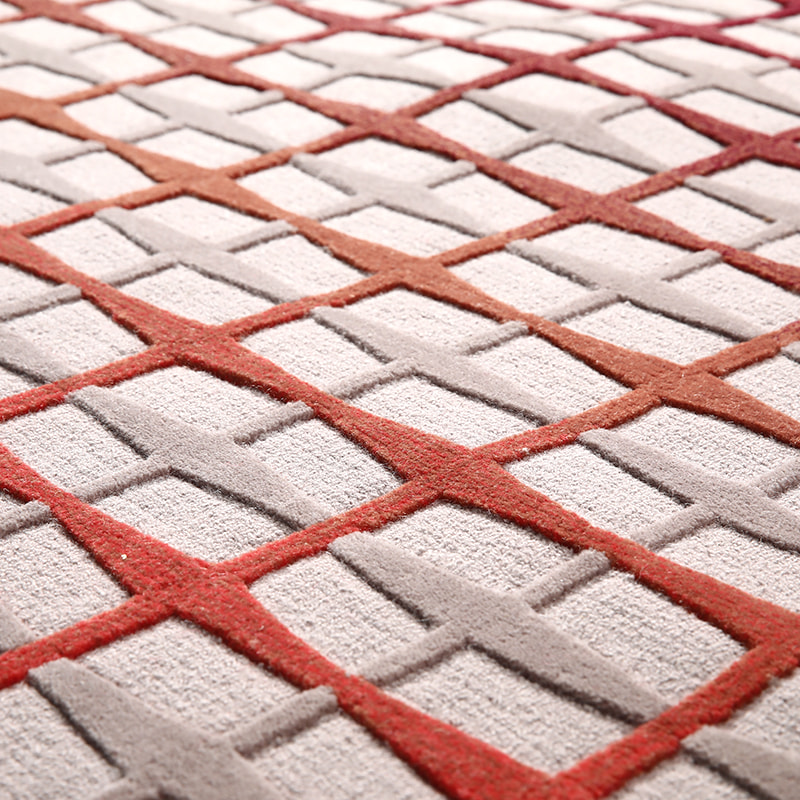
Origin of carpet
The history of human use of carpets can be traced back to the Paleolithic period hundreds of thousands of years ago. In order to adapt to the environment, ancient humans laid some hay, leaves, feathers, animal skins, etc. in dark, damp and uneven caves to ward off cold and moisture. Then, the ancestors gradually found that the sorted plant stems and leaves would be more durable and more comfortable. This primary finishing process gradually evolved into a weaving process. Hand-rolling and weaving, for twisting, led to the appearance of stone and ceramic spinning wheels and spinning slings. Different from the functions of modern carpets, these fabrics of the ancestors were clothes that were draped over the body during the day, and bedding and quilts that covered the body at night. With the development of social production, the first great division of labor in human history, planting and animal husbandry have been greatly developed, just as Engels said: "Compared with other barbarians, they not only have a much larger amount of milk , dairy products and meat, but also the appearance of hides, sheep’s wool, goat’s hair, and textiles that increase with the increase of raw materials” (cf. Engels, “Family, Private Property and the Origin of the State”). The emergence of "textiles" is a great progress of human society, which provides conditions for the formation and development of the carpet industry. The decorative patterns on black pottery and grey pottery during the Dingshan and Liangzhu cultures in my country are mostly mat, reticulate, rope, string and cloth patterns. At the same time, ancestors living in the Yangtze River Basin have begun to use plant fibers. and silk woven fabrics. Around 3000 BC, the Banpo people in Shaanxi had already domesticated sheep. In 2000 BC, wool was used for textiles in Lop Nur, Xinjiang. In the beginning, people collected the wool that fell on the ground, called picking up wool. According to records, there are two methods for picking cashmere: cashmere and plucking. ? Cashmere is combed down with a bamboo grate, and this method is applied to general cashmere. To collect finer cashmere, it must be plucked along its growth direction with fingernails, which is called plucking. These two methods, with very little output, originated in the ancient Western Regions, that is, today's Gansu and Xinjiang, and were introduced to the Central Plains in the Tang Dynasty. In the vast area of the Yangtze River basin, mulberry trees have been planted in the Neolithic Age, and there was an early sericulture industry. From the pottery unearthed from the Hemudu and Liangzhu cultures, silkworm patterns and pottery spinning wheels can be seen, indicating that silk weaving has emerged at that time. In 1958, silk silk, ribbons and silk ropes were unearthed at the Neolithic (2700 BC) site in Qianshanyang, Wuxing, Zhejiang Province. The silk fragments are 2.4 cm long and 1 cm wide, and are yellowish brown. The warp and weft density is 48/cm, and the twisting direction of the silk is Z; the width of the silk is 5 mm, and it is interwoven with 16 thick and thin silk threads; the projected width of the silk rope is about 3 mm, which is made of 3 tows. The twist direction is S, and the twist degree is 3.5 twists/cm. In 1970, the remnants of silk fabrics adhering to the bronze utensils unearthed from the mid-Shang Dynasty site in Taixi Village, Gaocheng, Hebei, showed that there were plain weave wan, crepe weave, twisted Luo and three twill weave at that time. There are five kinds of silk fabrics unearthed from Fuhao Tomb in Yin Ruins, Anyang, Henan Province, which were glued to bronze ware. There are more than 20 cases of yarn and dandy, 9 cases of cinnabar dyed, and 1 case of double warp and double weft silk. There is 1 case. This shows that the silk weaving technology in the Shang Dynasty developed rapidly. At the same time, the planting of plant fiber crops such as cotton, hemp, bamboo and palm has become more common, and a weaving process using plant fibers has emerged, which provides conditions for the formation and improvement of carpets. In 1978, in Dongyuergou, Hami County, Xinjiang, a communal cemetery of primitive clans before 3000 BC was discovered. In the tombs, some of the deceased were well-dressed. Most of the men wore pointed felt hats, fur or leather coats, long leather trousers, long leather boots, and their legs were wrapped with woolen webbing. In wool felt tombs. All kinds of wool ribbons are bright in color, most of them are red, green, brown, black and other large and small squares and color bars, very beautiful. It can be seen that the primitive tribe ancestors who lived in this environment at that time used wool fabrics as the main raw material for daily clothing. The production of wool fabrics is an important basis for the production of pile carpets. The ancestors often used the skins peeled from animals as mats and quilts, but after all, the skins were not very durable and fell off easily, so people began to imitate the clumps of hair growing on live livestock. Tie the twisted wool to the warp and weft of the wool fabric, which can increase the thickness of the fabric, better resist the cold, and at the same time the fabric is stronger, firmer and more durable. In the Han Dynasty, Liu Zhikuan described in "Salt and Iron Theory of Sanssuu" that "the beauty of fur and grass is humiliating." The period from 1200 BC to 220 AD was the mature period of Chinese wool weaving technology. Wool fabrics unearthed from the site in Hami, Xinjiang in 1200 BC, in addition to plain weave, there are also twill weave, as well as products with embroidery. The latitude and longitude density is 2-3 times larger than that unearthed in Lop Nur. A plain weave pattern (with embroidery), the bottom is 200×160/10cm, the flower part is double-strand thread, and yellow and green are embroidered into intermittent cloud patterns. A piece of two-color flower stalk, the bottom weave is twill, the warp and weft density is 100×330 pieces/10cm, and the flower part is 100×100 pieces/10cm. A mountain-shaped weave with a twill weave at the bottom, a warp and weft density of 240×200/10cm, and a flower section of 100×160/10cm. This batch of wool fabrics is rich in colors, including snuff, rice, chestnut, brown, green, yellow, red, brown and yellow. The substantial increase in warp and weft density and the prevalence of twill weave indicate that a breakthrough has been made in wool weaving technology at that time. Weaving tools have adopted looms with fixed frames. By the Eastern Han Dynasty, Chinese wool weaving technology had developed in organizational structure, and there were weaving weaving methods with weft-weight and flat weaving and warp and weft weaving, and velvet weaving appeared in carpet weaving technology. Unearthed from the Eastern Han Dynasty site in Minfeng Niya, Xinjiang, there are man and beast grape pattern, blue tortoise shell four-petal pattern and colorful blankets are the representative products of this period. The human-animal grape pattern is interwoven by two sets of yellow warp threads and two sets of yellow-green weft threads to form a weft double weft weft display fabric. The pattern is clear and the pattern has the local national style. The warp and weft density is 200×30/10cm. The four-petal pattern of the tortoise shell is the weft of the weft triple organization. The warp and weft density is 160×80/10cm. Tortoise shell pattern is a traditional pattern in the Central Plains, and it is a physical proof of cultural exchanges among various ethnic groups in China. The pile wefts on the colored blankets are knotted in a horseshoe shape, with 6 ground wefts interlaced each, and piled in a row, and so on. The distance between adjacent piles and wefts is 14 mm, and the length of piles and wefts is 20 mm. The piles completely cover the basic tissue, which is beautiful and elegant. In the ancient Loulan ruins in Xinjiang, the Han Dynasty woolen fabrics were unearthed, and the weaving method was adopted. The galloping horse pattern shows the local ethnic style. The Maoluo fabric and yellow diamond pattern twill brown unearthed from the Niya Eastern Han site in Minfeng, Xinjiang, are finely organized and uniform. It can be inferred from this that the loom was quite mature at that time. In 1957, at the Nuomuhong site in the southern Qaidam Basin in Qinghai (790 BC), five strips of yellow-brown and two-color stripes were excavated, as well as herringbone woven wool belts and double and three-strand wool ropes. The warp and weft density of the stripes is 13/cm and 6/cm. It is much rougher than the Wubao site in Xinjiang. In 1977, a large number of woolen fabrics were unearthed from the Aragou Warring States Tomb in Turpan, Xinjiang. According to identification, not only wool was used in large quantities, but also goat hair and camel hair were used as raw materials for wool spinning. In the autumn of 1978, at the Wubao site in Hami area of Xinjiang (more than 1200 BC), exquisite woolen fabrics were unearthed, with two kinds of weave, twill and plain. There is also the first discovered mottled thread woven into colored stripes. It shows that the wool textile dyeing technology in Hami area was at a high level at that time. In April 1980, the Xinjiang Institute of Archaeology discovered rough woolen fabrics wrapped with ancient corpses at the ancient site of the Kongque River on the ancient "Silk Road". The most important source of ancient textiles in my country is the Yingpan site in Yuli County, Xinjiang. The site is located at the southern foot of the Kurutag Mountain, about 4 kilometers away from the north bank of the dried-up Kongque River, and on the northwestern edge of the lower Tarim River delta. It is connected to the Turpan Basin, adjacent to Lop Nur in the east, Korla and Kuqa in the west, and about 200 kilometers away from the old city of Loulan in the east. In 1893, the Russian Kozlov discovered the camp site on his way to explore Lop Nur. At the beginning of the 20th century, the Swedes Sven Hedin, Bergman, and the British Stein visited the camp site and obtained some precious cultural relics. . In 1995, the Xinjiang Institute of Cultural Relics and Archaeology conducted a rescue excavation in the Yingpan cemetery, excavating 32 tombs and cleaning up more than 100 tombs that were stolen. In 1999, the rescue excavation was carried out again, and 80 tombs were excavated, and more than 400 relics were unearthed. Among the cultural relics unearthed from the Yingpan site, textiles account for a large part, because these textiles are well preserved, exquisite and unique in style, which has attracted widespread attention from the world. The Yingpan site has preserved many exquisite textiles, of which 99 are of relatively complete research significance. Among them, there are 42 pieces of wool fabrics, 34 pieces of silk fabrics, 6 pieces of cotton fabrics, 4 pieces of linen fabrics, and 10 pieces of silk, wool, cotton and linen. A more unusual discovery was a colorful lion-planted down blanket covering a coffin. This flocked blanket has colorful flocking patterns such as red, dark yellow, medium yellow, orange yellow, green, grass green, navy blue, lake blue, light blue, pink, dark brown, and white. The main pattern is a crouching male lion. The shape of the lion is unique, the waist is narrowed, the front and rear hips are raised, forming large ups and downs, with a strong sense of movement. The lion's head is viewed from the side, the facial expression is kind, and the decorative lion's mane, feet, buttocks and tail extend beyond the frame. The composition is bold and lively and eclectic. Faced with this gorgeous fleece, archaeologists are very surprised. How are so many colors woven and combined into beautiful patterns with rich three-dimensional effects? This is still a mystery. The appearance of wool fabrics should be closely related to the living environment. Raising livestock such as horses, sheep, cows, camels, etc. is the main content of the production and life of the nomads in the Western Regions. The abundance of fur resources has promoted the development of wool fabrics in Xinjiang. Xinjiang has been closely related to Central and Western Asia in terms of geography and culture since ancient times, and the woolen weaving craftsmanship in Central and Western Asia also has a great influence on the development of woolen fabrics in Xinjiang. (See Wu Ting's "Overview of Textiles Unearthed at Yingpan Site, Yuli County, Xinjiang") In 1949, an expedition led by Russian archaeologist Ludenko discovered a velvet blanket dating from 500 BC in the Bazerek Valley at the northern foot of the Altai Mountains, known in the industry as a Bazerek carpet. The blanket should be a relic from the tomb of Prince Altai, with a size of 1.83 meters x 2 meters. The pattern layout of the Bazelek carpet is very interesting. There are five fringes, and there are four-petal patterns in the ground. The first and fifth of the five fringes are square birds. The second path (big side) is the hooded charioteer, either sitting on the horse or standing beside the horse. The third is a geometric pattern, and the fourth is an elk pattern. The whole carpet is colorful, reflecting the life of nomadic tribes, full of rich grassland atmosphere. The Bazelek rug is now in the State Heritage Museum of St. Petersburg, Russia. In the book "Catalogue of Art Carpets on the Great Wall of the Western Regions" by Mr. Li Rukuan, he included several tufted carpet specimens unearthed from the ancient Loulan site in Lop Nur, which were collected in the Victoria and Arabia Museum in London, England. One of the wool flocked carpet fragments, measuring 3.4 cm x 4 cm, is made of brown wool for warp, 4 strands of coarse wool yarn are combined, twisted for weft, and the pile is softer colored wool yarn. Each pile rotates 1 to 2 times around a warp thread to form a very strong knot, which is called "single warp button" in the industry, with an average of 40 knots per 10 square centimeters. White, brown, red, crimson, pale yellow, yellow and royal blue wool yarns are used to show patterns on the dark red ground. Experts believe that this Xinjiang carpet fragment is the earliest buttoned carpet discovered in the world, and it provides a precious specimen for us to study the origin and development of carpets. (See Chen Chongyuan's "Antique Talks Old News") At the beginning of the 20th century, the British explorer Stein unearthed a batch of ancient fabrics, including ancient carpets, from the 1st century BC ancient tomb site in the Tarim Basin of my country. Stein (Marc AurelStein 1862-1943) British explorer, with the support of the British and Indian governments, has conducted three Central Asian expeditions. From 1900 to 1901, Stein conducted his first expedition, mainly excavating the ancient ruins of Hotan area and Niya, and authored the travel journal "Sand Buried Hotan Abandoned Site" and the official archaeological report "Ancient Hotan". From 1901 to 1908, the second expedition was carried out. In addition to revisiting the ruins of Hotan and Niya, it also excavated the ancient Loulan ruins, and went deep into the Hexi Corridor, excavated a large number of Han bamboo slips along the Great Wall near Dunhuang, and visited Mogao. He took advantage of the ignorance of Taoist Wang to buy 24 boxes of Dunhuang manuscripts, 5 boxes of silk paintings and silk fabrics unearthed in the Tibetan Scripture Cave. Author of the travel journal "Desert Qidan Site Records" (1912), which contains detailed records of Dunhuang's deception of treasures, and the official archaeological report is "Western Regions Archaeology Records" (1921). From 1913 to 1915, Stein conducted his third expedition, revisited the ruins of Hotan, Niya, and Loulan, and went to Dunhuang again. He obtained more than 570 Dunhuang manuscripts from Taoist Wang, and excavated Heichengzi and Turpan Site, its official archaeological report is "Asian hinterland archaeology" (1928). Stein said in the book "Archaeology of the Western Regions": "When investigating the ruined site of Loulan Hancheng, we found the remains of the old road from China to the Tarim Basin in the past. , after the excavation, an amazing pile of ancient fabrics, mixed with ancient Chinese colored silk and blankets", "beautiful carpets, ... piles of pile carpets, in addition to coarse wool fabrics and felts". The cultural relics and documents unearthed in Dunhuang and other places obtained by Stein's Central Asian exploration are now in the collections of the British Museum in London, the British Library and the Library of the Ministry of Indian Affairs, and the Museum of Central Asian Antiquities in Delhi (now the National Museum of India). Experts believe that this batch of carpet fragments that Stein took away from the Xinjiang region of our country is one of the oldest surviving real pile carpets. Source Brand Network Reprint please indicate the source

how about persian rugs
how about persian rugs Persian carpets have been given to be noble, elegant and mysterious since ancient times, which is one of the boutique carpets. It is also well-known internationally, and is loved by the world for its fine texture, simple and elegant patterns and exquisite craftsmanship. Persian carpets are one of the best in carpets. Its exquisite weaving craftsmanship and artistic value have been widely known, because it has been integrated into the ancient Persian civilization, and gradually formed an artistic form, which is a kind of art. Persian carpets have fine workmanship, unique patterns, and various colors, which are integrated with the ancient oriental culture. It has become an artistic value and a collection value at the same time. Good reputation and affordable price. Persian Carpet Brand From the day it was produced to the present, Persian carpets have a history of 2,500 years, which is really a long history. It is impossible to verify when the Persian carpet appeared. It was around the time of the nomads that the Iranians began to use wool to make carpets. This is probably the origin of the Persian carpet. After the 21st century, Persian carpets are even more favored by people, especially young people are particularly fond of Persian carpets. Persian rugs are popular because of their long history. Persian rugs can be said to be the finest in rugs, because of their unique craftsmanship, they have a very high artistic value. Another unique feature of Persian rugs is that there are no two identical Persian rugs, which is one reason why Persian rugs have a high collection value. Persian rugs are ornaments in ordinary households in Iran, which can be laid on the ground or hung on the wall to decorate the wall. If it is a handmade Persian carpet, it is even more powerful, because it takes a lot of manpower and material resources to manufacture, so handmade carpets are expensive. persian rug prices With the popularity of Persian carpets, there are also genuine and counterfeit products. There are Persian hand-made and machine-made, and domestic hand-made and machine-made. Of course, the price is also very different. The price of Persian hand-made carpets is 2,000 yuan per square due to the complicated production process. The price of Persian machine-made carpets may be lower, but it is also around 1,000 yuan. After all, the raw materials have not changed; Persian rugs are mainly popular in Nanyang, Henan. Machine-made rugs can be made for only 100 yuan, and the relative cost of manual work will be slightly higher.
